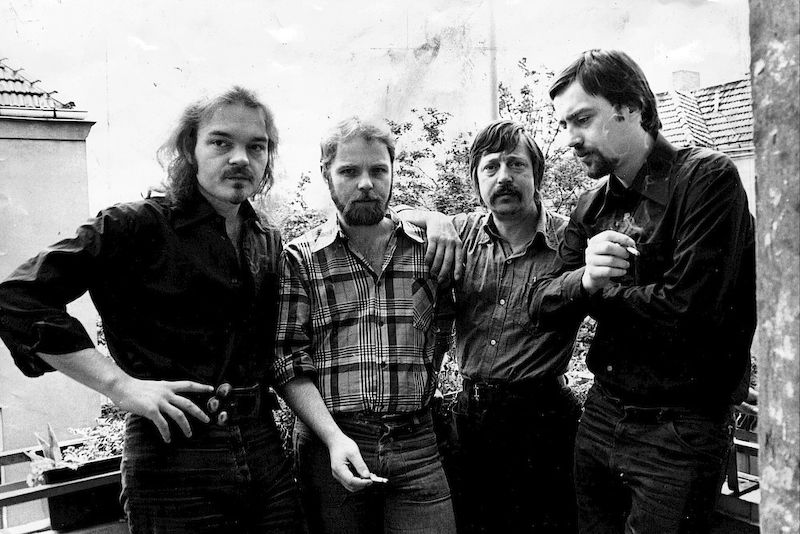
Jürgen Fuchs (right) – here in a meeting with civil rights activists Christian Kunert, Gerulf Pannach and Wolf Biermann (left to right) in West Berlin – was subjected to the Stasi’s psychological methods.
© Robert-Havemann-Gesellschaft/Johanna Elbauer/RHG_Fo_HAB_17672
11.03.2020 in Science, Context

Psychology for the Stasi

The internal security service of the former German Democratic Republic (Stasi) used highly targeted psychological methods to discredit dissident citizens and break their resistance. In the 1970s, the Stasi even introduced “operative psychology” as a subject at its university in Potsdam-Golm. Professor Uwe Wolfradt explains how psychology was misused by the Stasi and how it affected its victims. Read more
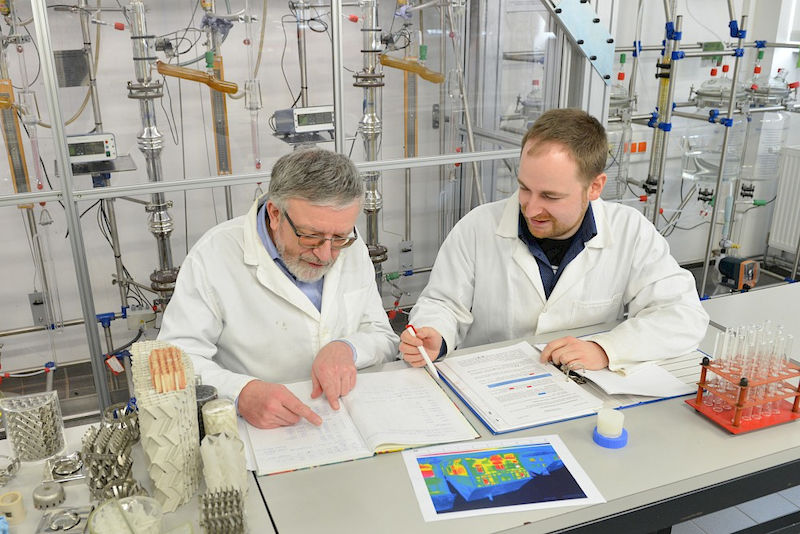
Thomas Hahn (left) and Felix Marske in the laboratory. They are working on a new latent heat storage that is currently available in a cylindrical form.
© Markus Scholz mit Ingo Bartussek/stock.adobe.com
27.02.2020 in Science, Research

Heat accumulators of the future

Saving energy will play a crucial role in protecting the climate, and this could be achieved by the new heat storage systems for buildings that are currently being researched at the Institute of Chemistry. The results have already impressed at the Hugo Junkers Awards. Read more

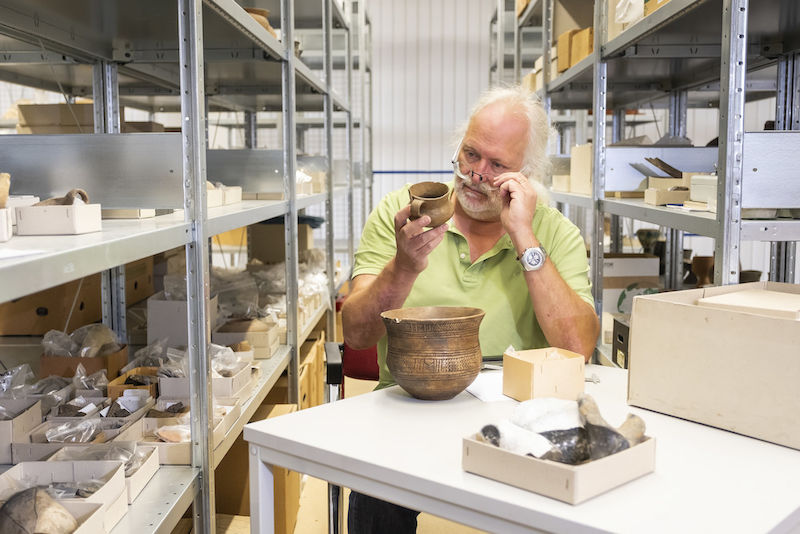
Archaeologist François Bertemes in the institute’s repository
© Maike Glöckner
21.10.2019 in Science, Research

Early networks

For eight years, Professor François Bertemes coordinated research on the context of Nebra Sky Disc. The discovery of the disc has prompted archaeologists to completely rethink their notions about life in the Early Bronze Age. Read more

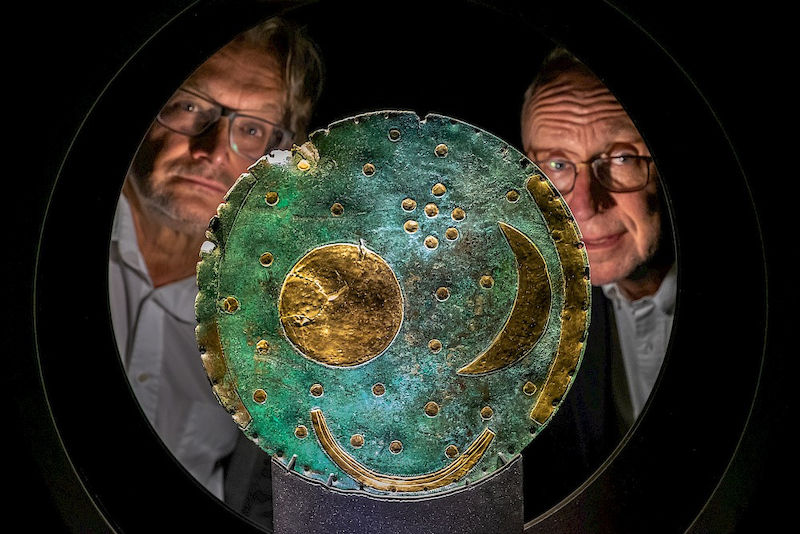
Landesarchäologe Harald Meller (links) und Geologe Gregor Borg mit der Himmelsscheibe von Nebra
© Maike Glöckner
21.10.2019 in Science

Gold fever

Researchers solve mystery surrounding the Nebra Sky Disk – with a precious metal playing a decisive role in more than just the famous Bronze Age discovery. Read more

Dietrich H. Nies – here in the lab with Lucy Bütof – has been researching a gold-forming bacterium for years.
© Maike Glöckner
17.10.2019 in Science, Research

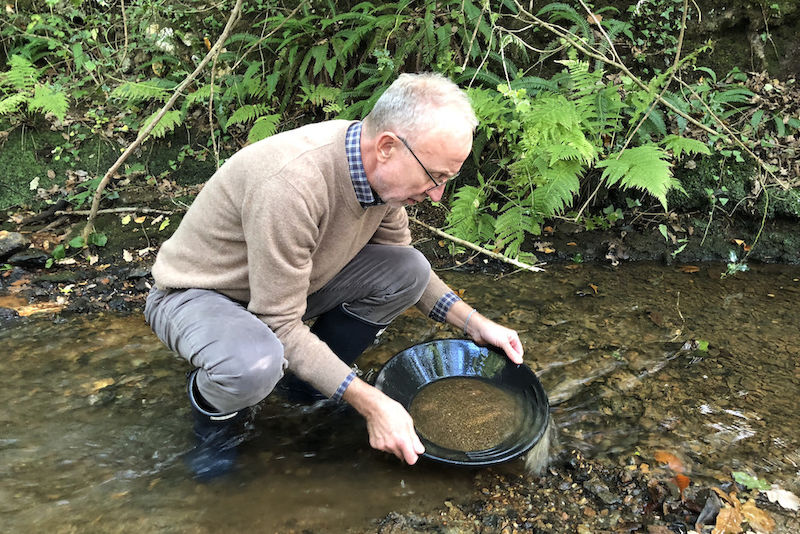
The tiny philosopher’s stone

The bacterium C. metallidurans is most notable for its perseverance, thriving in areas contaminated with heavy metals. It has attracted the attention of a research group in Halle, led by Professor Dietrich H. Nies, but for an entirely different reason: it produces microscopic gold nuggets. Read more

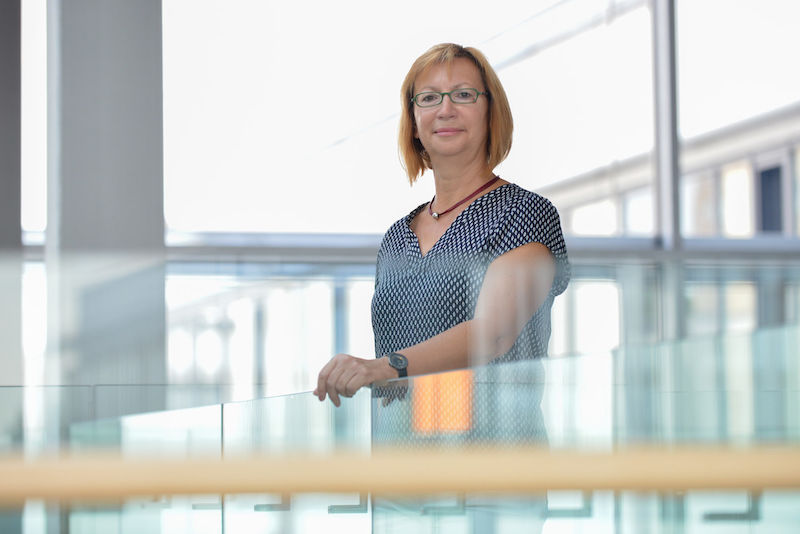
Heike Weinert is the Animal Welfare Commissioner.
© Markus Scholz
14.10.2019 in People, Science

“We cannot afford to slip up”

Animal welfare is Heike Weinert’s job. Since the 1990s, the biologist has been an Animal Welfare Commissioner in the higher education sector and has been doing this important work for the Faculty of Medicine for almost a year. With conviction and passion. Read more

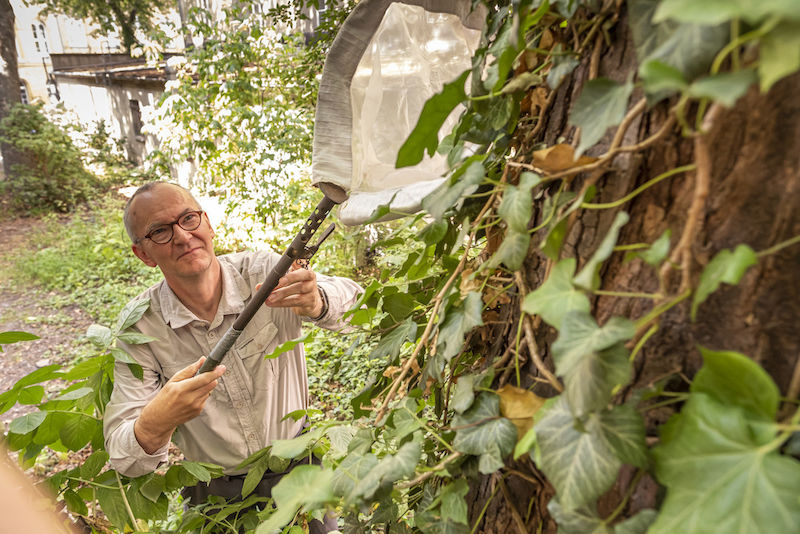
Andreas Stark catching flies with a net. He has been researching the animals for decades.
© Maike Glöckner
07.10.2019 in Science, People, Miscellaneous

The fly expert

The University’s natural science collections turn 250 years old in November. Since the beginning, they have been enriched by civic scientists. One of them today is Dr Andreas Stark, who has dedicated himself to special insects for decades. Read more

Academics working as taxi drivers is a common cliché, but it is only a rare occurrence.
© stock.adobe.com / Tobias Arhelger
23.09.2019 in Science, Context

Context: Are there too many academics?

It is frequently said that universities must orientate their courses towards the labour market – or else risk of a wave of unemployment. Professor Manfred Stock, educational sociologist, explains why this is wrong and how universities even adapt the labour market to themselves. Read more

Auf unserer Webseite werden Cookies gemäß unserer Datenschutzerklärung verwendet. Wenn Sie weiter auf diesen Seiten surfen, erklären Sie sich damit einverstanden. Einverstanden