
Smart research for strong plants

Back in 2023, a team of researchers at MLU was able to show that a single change in the genetic material of barley was enough to make plants develop faster and thus flower earlier than others. The barley genome comprises 5.1 billion base pairs. The reason that a single change can have such a profound effect is due to the following: The genome serves as a blueprint for proteins that control all important processes in plants. In the cells, the genetic code is used to string together amino acids, which are the building blocks of proteins. The order of these building blocks determines the three-dimensional structure of a protein – and also its specific function. A single change in the genetic code can alter the structure of a protein so that it functions differently, not at all, or even better. With the large-scale Collaborative Research Centre “Plant Proteoform Diversity” (CRC 1664), the underlying molecular mechanisms will now be examined in great detail – funded by 13.4 million euros from the German Research Foundation (DFG).
“We will explore the influence of naturally occurring mutations on the structure of plant proteins and thus on their function,” CRC spokesperson, Professor Marcel Quint from the Institute of Agricultural and Nutritional Sciences at MLU, says. The focus is on so-called point mutations – tiny changes at just one point in the plant genome – which can have a significant impact.
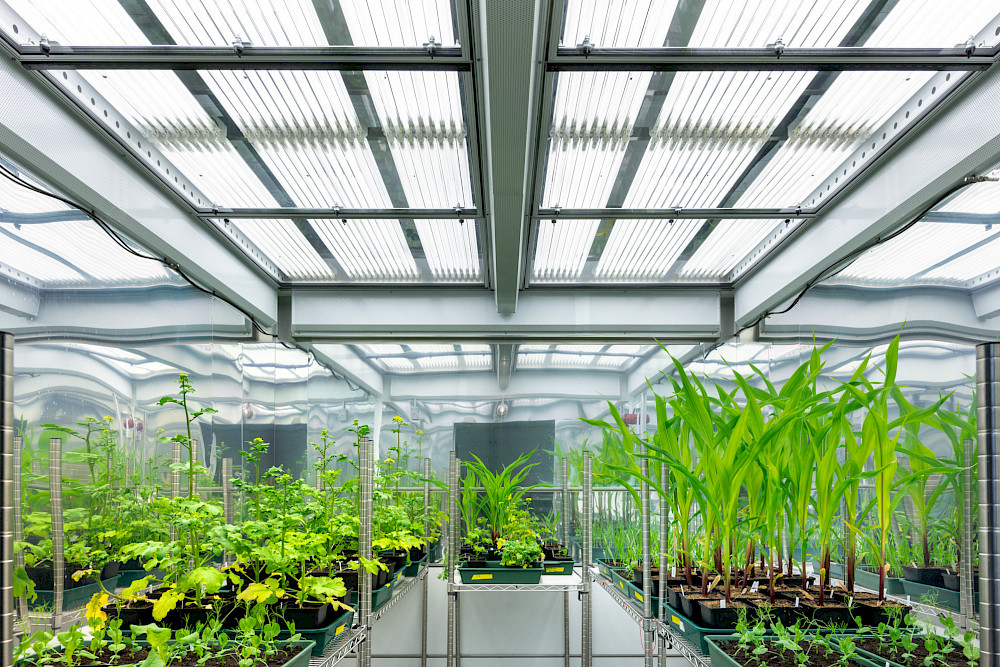
For this project the team is combining expertise in plant research and protein biochemistry – two traditional and research-strong pillars of molecular biosciences at MLU. In all 17 sub-projects, researchers from different disciplines are cooperating closely: utilising synergies in an interdisciplinary, collaborative way.
“We have combined the best of both worlds, creating a common ground on which we can fully explore our two research areas of plants and proteins. This combination is unique in Germany,” Quint explains. “With this CRC, we are able to compete with large research locations at the highest scientific level, despite being based in the comparatively small research location of the City of Halle.” Just like the plant researcher Marcel Quint, his colleague, Professor Andrea Sinz from the Institute of Pharmacy at MLU, is thrilled about the plan to explore uncharted territory: “In the field of plant research, proteins have not been studied as much as human proteins in pharmacy and medicine. This opens up both new and exciting possibilities for us to investigate plant proteins.”
The research location of the City of Halle is ideally suited as an experimental field for the set objectives. An excellent analytical infrastructure and the corresponding know-how are found locally: everything from cryo-electron microscopy to X-ray structural analysis and NMR spectroscopy, right up to mass spectrometry. The latter is of particular importance when dealing with a special class of proteins, known as intrinsically disordered proteins. These control numerous vital processes, yet lack a fixed or ordered structure. “These proteins are highly flexible. Depending on their environment and the binding partners, they change their structure. In order to study them in more detail, we require complex experiments and methods,” Sinz explains.
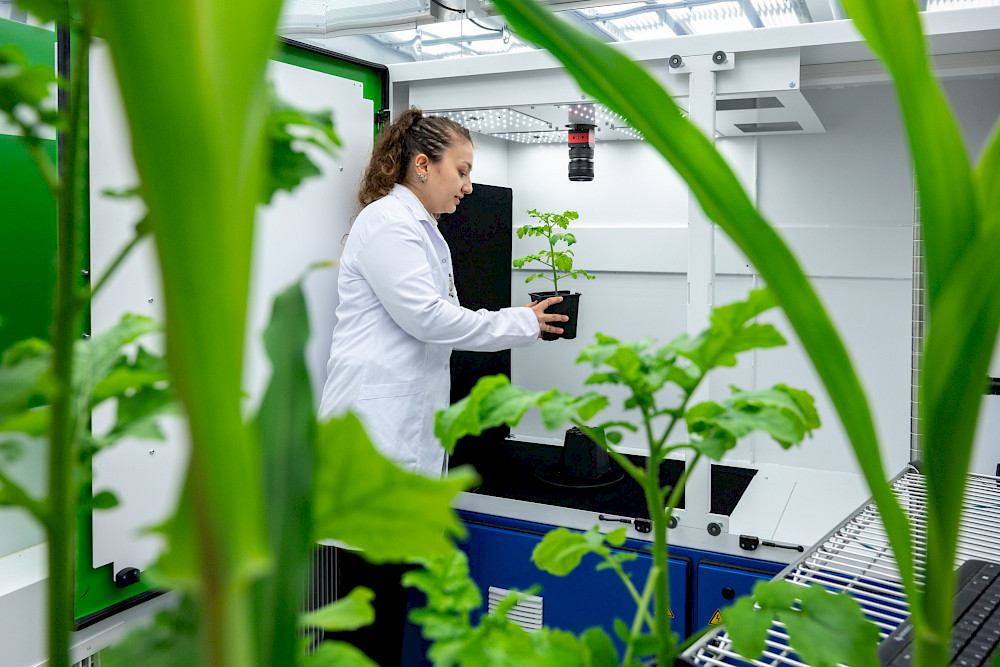
The scientific environment in and around the City of Halle also offers the new CRC numerous opportunities for cooperation: In addition to the MLU, the Leibniz Institute of Plant Biochemistry (IPB) on the Weinberg Campus is also participating in the network, as is the Leibniz Institute of Plant Genetics and Crop Plant Research (IPK) in Gatersleben and the University of Leipzig. A total of 27 doctoral students and nine postdocs are conducting research on the CRC projects. The team is very international, ranging from the local expertise to doctoral students and postdocs from all over the world. “This internationality is important to be competitive,” Sinz emphasises.
The multitude of methods, disciplines and people is necessary to implement the ambitious research programme. As Marcel Quint explains, to date, science has often lacked an understanding of the effects of individual mutations on protein structure and function. “In our CRC, we offer precisely the right expertise to investigate this in detail. We are conducting research in the molecular mechanisms that can later be translated into any phenotypic expression in plants, with a close interlocking of protein and plant research,” Marcel Quint explains. “We are developing a toolbox, so to speak, to get from the gene variant to a protein with certain functions.”
In order to better understand the molecular mechanisms, the researchers first want to prove that genetic diversity actually leads to different protein structures. The research questions include, for example: How do the smallest changes in proteins – for example, due to missing sections or tiny modifications at the genetic level – affect the three-dimensional structure of proteins and their function? And: How do plants deal with stress caused, for example, by drought, heat, flooding or extreme weather events?
The initial focus is on the model plant Arabidopsis thaliana, which has been used by researchers all over the world for many years. Marcel Quint: “There is an incredible amount of genetic information available for this plant. More than 1,000 natural origins from around the world have been fully sequenced. And we know every small difference in their genomes.” The data available will be analysed, synthesised and combined with the team's own new experiments. In this way, the team wants to gain an exact picture of how these genetic variants arise in nature and what their effects are.
The envisaged “toolbox” of basic research promises a wealth of specific future applications. Within the context of climate change, the objective is, for example, to make crops more resistant to drought and heat. Countless other applications are also conceivable, such as the synthesis of natural substances or the production of new plant-based ingredients for medicines. Quint describes the long-term vision as follows: “In the future, plant breeding will look completely different to what it does today. You start by thinking about what kind of protein you would need in order to create a certain function. Then you design this protein at the genomic level.” Subsequently, the blueprints for these proteins would be integrated into plants to give them the desired properties. However, this idea is still a long way off because, first of all, many fundamental relationships need to be investigated and understood.
The overall project is designed to run for three periods of four years each. The DFG approved funding for the first period. Sinz: “Here, our scientific expertise is truly competitive on an international scale. We are very grateful for this long-term structural funding project, which will develop both national and international appeal.”