
A booster for the bioconomy

Digitalization and plants – what initially sounds contradictory has long been an inseparable combination in agriculture. Drones that detect plant growth and pest infestation of grain from the air and model the collected digital information with the help of artificial intelligence are still quite novel, but no longer science fiction.
In Saxony-Anhalt, innovative technologies and methods in this area are set to play a key role in the future. The region is undergoing a structural change from a past of coal mining toward a modern and sustainable business location. In this regard, key pillars of the region are nutrition and agriculture, while the consequences of climate change represent one of the major challenges of our time.
This is exactly where the DiP consortium comes in. In the initial funding phase until 2028, the German Federal Ministry of Education and Research will be providing up to 50 million euros in funding for the network. The 19 collaborative projects aim to exploit the great agricultural potential in the Central German mining area in Saxony-Anhalt and expand it with the help of technological innovation. Here, the objective is to create a model region of the bioeconomy with scientific excellence, new industries and attractive jobs. The project is coordinated by Martin Luther University Halle-Wittenberg. The university is either leading or contributing its expertise as a partner to 14 of the collaborative projects and will receive around 18.3 million euros in funding for this.

“Thanks to the high concentration of leading international plant research institutes, for example at our university and the Leibniz Institute of Plant Biochemistry or the Leibniz Institute of Plant Genetics and Crop Plant Research, plant sciences are a core competence in Saxony-Anhalt. For DiP, research institutions and selected business partners from the region have joined forces for the first time in a network of over 40 members,” Professor Klaus Pillen, professor of plant breeding at MLU and spokesperson for the DiP consortium says.
The major objective? “Within the next five to ten years, we want to substantially advance the digitally-supported transformation of the economy in the model region,” Pillen says. The goal is to use digital technologies to establish new, plant-based value chains in the model region and expand existing ones. The DiP concept focuses on utilising the region's existing strengths. In addition to plant primary production, the focus is on plant biorefineries and other processing methods. “Here, in particular, we would like to establish the recycling of plant residues, by-products and recyclable materials as climate-neutral substitutes for petroleum-based or imported products. These include straw, fruit residues and agroforestry biomass,” Pillen says.
18 joint projects took up work in the summer of 2024. Thematically, they can be categorised into three areas, referred to as so-called lighthouses. The first lighthouse projects investigate agricultural crops such as cereals, sugar beet and peas. The core topic of the projects in the second lighthouse revolves around climate-resilient cultivation systems for bio-based raw materials. In the third lighthouse, the projects deal with speciality crops such as medicinal and aromatic plants that are already established or being developed further in Saxony-Anhalt.
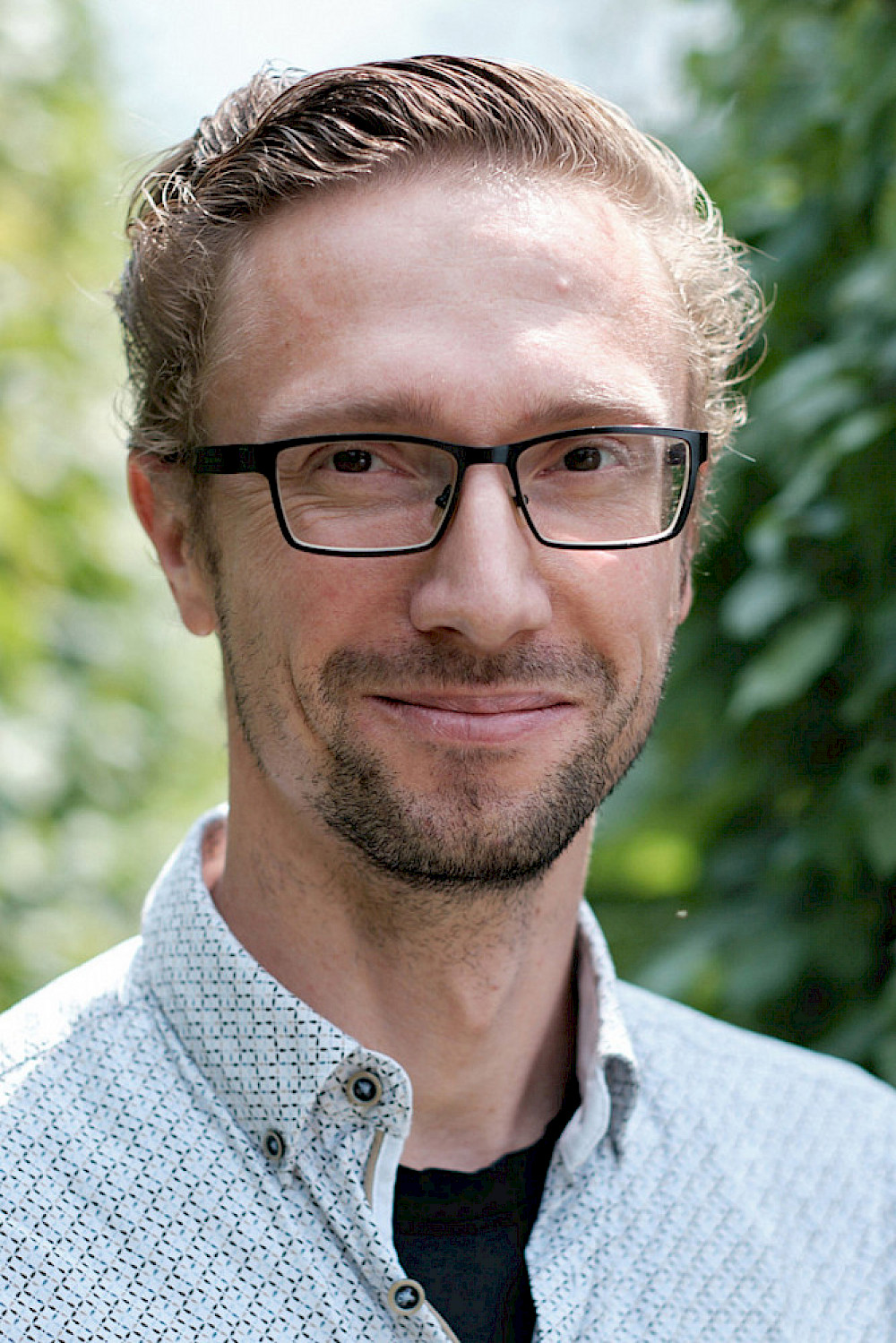
In each lighthouse, there is also a junior research group run by highly qualified postdoctoral researchers. They work on projects that have a huge potential for spin-offs. One of these three projects is “Diamant”. “Our expertise lies in long read sequencing, which we use to accelerate modern plant breeding, with the help of bioinformatics,” project leader Dr Thomas Schmutzer from MLU says. In genome research, the technology offers significant benefits over previous methods with regards to accuracy, quality and completeness. It makes it possible to read longer DNA or RNA segments in a single round. In the past, complex and lengthy procedures were required for this. As Thomas Schmutzer explains, this method can be used to provide answers to completely new questions: “Which section of the genome is responsible for making a particular plant more resistant to drought? The only way to find out is to take a comparative look at many plant genomes.”
The Diamant team is working on cost-effective methods for characterising and digitising the genomes of numerous plants in a high-throughput manner. “We would like to decode genomes to support the cultivation of crops such as wheat, but also of special crops. There are still numerous gaps in our knowledge, especially when it comes to the latter,” Schmutzer says. Ultimately, breeding businesses or one of the many DiP business partners from cultivation and utilisation could benefit from the findings of the group.
To facilitate the transfer to industry further, the DiP network is cooperating with the Technologie und Gründerzentrum Halle (TGZ). The TGZ supports the projects in the development of innovative technologies, products or services, as well as in the transfer of results into concrete business models. This includes topics such as patents and possible follow-up funding, as well as the licensing of newly developed technologies.
For an initial period of five years, the partners will cooperate closely with the support of the DiP coordination office to research their individual ideas for cultivating the potential for developing agriculture further in southern Saxony-Anhalt that arises from combining plant-based value chains, digitalization and sustainability. In autumn 2024, a project for accompanying research was launched under the direction of the Helmholtz Centre for Environmental Research (UFZ), which is to establish sustainability monitoring, for example.
The DiP participants are highly motivated and enthusiastic about implementing their ideas. Thomas Schmutzer: “DiP has become an impressive construct, in which a great deal of expertise is brought into various networks. These projects complement each other wonderfully. This is a great strength of the entire DiP consortium.”
The objectives for the first phase of funding are ambitious: In 2028, already well before the end of coal-fired power generation in 2038, the consortium plans to present concrete results from the projects that are to be led to market maturity. As such, southern Saxony-Anhalt will become a model region for a digitised, competitive and climate-neutral plant-based bioeconomy. This should be characterised by scientific excellence, innovative industries and attractive jobs, thus providing impetus for the long-term development of the region. In a second funding phase, which will run until 2032, successful collaborative projects will be developed further and more ideas will be implemented.
Further information at: https://www.dip-sachsen-anhalt.de/